
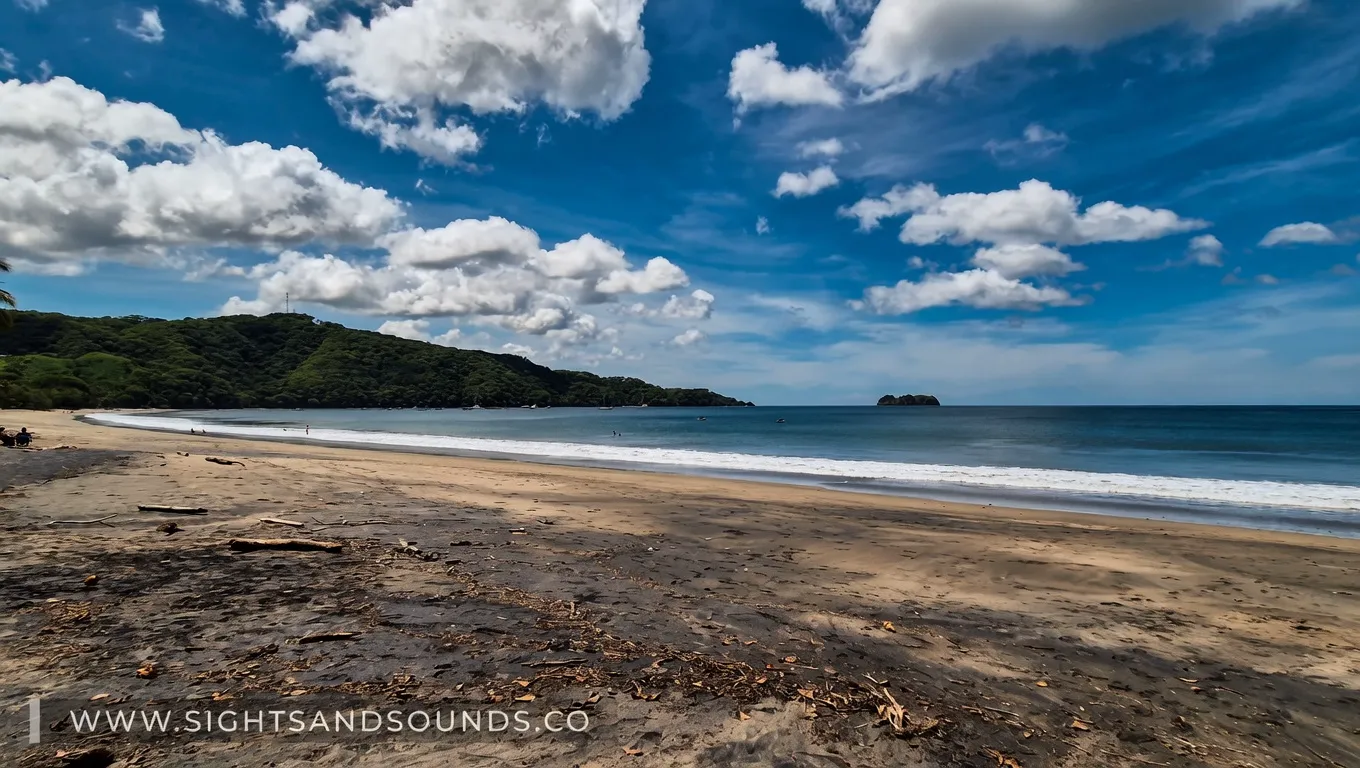
Guanacaste has more coastline than most visitors get through in a single trip. What makes it interesting isn’t just the number of beaches — it’s how different each one feels. Within an hour of Liberia airport you can find an expat beach town with a Sunday market, a cove tucked into volcanic rock with pufferfish just offshore, a purpose-built car-free village with stone streets, and a surf town that pulls people from around the world. These are six of my favorites along the Guanacaste coast, each with its own crowd and its own reason to visit.
Playas del Coco
Coco is the closest beach town to Liberia airport — about 30 minutes by car — and it’s where I keep coming back to as a base. A large expat community lives here year-round, so the town has a real permanent life to it: local restaurants, pharmacies, the Sunday market. It doesn’t feel like a place that exists only for tourists.
That said, high season makes a noticeable difference. The town fills up, the Sunday market draws significantly more vendors, and the main strip gets busy in a way that the shoulder months don’t match. If you want the market at its liveliest, January through March is peak.
The beach itself is calm, the snorkeling just offshore is decent, and from here you can reach Ocotal, Hermosa, and Las Catalinas within 20 minutes. For first-time visitors to Guanacaste, it’s the most practical starting point — close to the airport, close to Liberia for stocking up, and walkable once you’re settled.
Playa Hermosa (Guanacaste)
A few kilometres south of Coco is Playa Hermosa, not to be confused with the one near Jacó. Every time I’ve been, the beach has more people than Coco. It’s consistently one of the nicest beaches in the country: a long curved bay with calm water and green hills behind it. The crowds make sense.
Unlike Coco, there’s no real town to walk around. Restaurants and condo developments are scattered along the main road, not clustered. You come for the beach, and that’s mostly what you get. Easy half-day south from Coco.
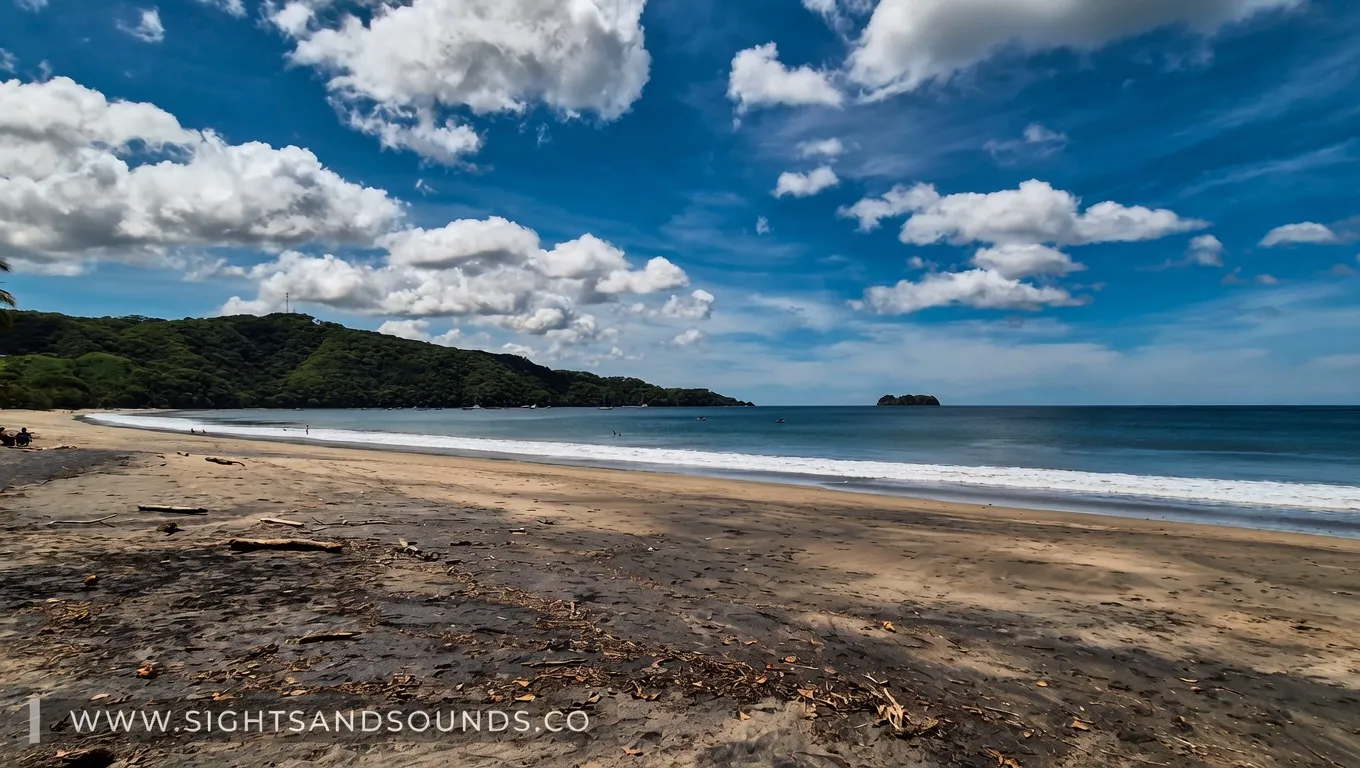
Playa Hermosa, Guanacaste — one of the nicest beaches on the coast, just south of Coco.
Playa Ocotal
Ocotal is about 10 minutes from Coco, tucked into a cove with clear water, volcanic rock shelves, and some of the best snorkeling in the area. I’ve seen pufferfish, needlefish, and all kinds of colorful reef fish. The species mix changes more than most beaches in the area.
The beach has two distinct sections. The north end is deeper with chasms running through the tide pools — better for experienced snorkelers comfortable with surge. The south end is more protected and easier to navigate, a good starting point if you’re not sure what to expect. At high tide, smaller reef fish get caught in the pools on the rock shelf, so you can see a lot without even getting in the water.
The rocky edges get hot in the sun, and you’ll want grip walking out over the shelf to reach deeper water — water shoes get real use here in a way they don’t at most beaches.
Las Catalinas
Las Catalinas is unlike anything else on this list. It’s a walkable public town built around a high-end private condo development — Mediterranean architecture, stone-paved streets, no cars inside. You park outside the entrance and walk in, which takes about five minutes. There’s a short potholed stretch of road on the approach from Potrero. Despite that, any car handles it fine at low speed. In high season and on weekends the parking area fills up fast, so earlier is better.
The beach in front of town is calm and good for swimming. The restaurants are good, not just passable tourist options. There are hiking trails behind town with coastal views that most visitors don’t know about. Check the signage for trails, and consider renting a bike in town to fully explore them.
The area around Las Catalinas is still actively being developed, so it’ll only get more popular from here. Since you park away from the beach, leaving anything visible in the car in a busy lot isn’t ideal — a lockable cross-body bag you can keep with you makes more sense.
Tamarindo
Tamarindo is the surf and party option on this list. Think of it as Playas del Coco with a bigger beach, consistent waves, and a more international crowd. It’s very walkable, the surf is reliable year-round, and there’s no shortage of restaurants and bars within a few blocks of the water. It’s farther from Liberia airport than Coco, closer to an hour’s drive. Staying right in town costs more than other beach towns.
The Guanacaste sun is stronger than it looks, and long days at the beach here add up fast. Local sunscreen options are limited and expensive, pack a reef-safe sunscreen from home.
Santa Teresa
Santa Teresa is the most effort to reach from Liberia. It’s on the Nicoya Peninsula, and the drive from LIR is long. A different option if you’re traveling from San José: take the ferry from Puntarenas. You can drive your car on, or walk on and continue by bus. The ferry is cheap, the views across the gulf are good, and the newer boats have a comfortable lounge and a cafeteria. Treat the crossing as part of the trip, not just a transfer.
Once you’re there, the town is very laid back. It’s what Dominical is to the South Pacific. Surf-focused, hostel-heavy, and still not fully packaged even though more people find it every year. The main road has rough patches but any car can handle it. Where things get more interesting is the surrounding beaches: many are on unpaved tracks, and most people rent ATVs in town to reach them rather than paying for a 4×4 rental for the whole trip.
Which Beach Is Right for You?
I don’t surf, so my preference is Coco — it’s close to the airport, close to Liberia for grocery runs and shopping, and walkable in a way the others aren’t. That matters on a longer stay.
For a calm base with easy day trips, start at Coco and use it to reach Hermosa and Ocotal. For something architecturally distinct, Las Catalinas is a solid half-day just to walk the town — get there early to avoid the parking scramble. For surf and nightlife, Tamarindo is the clear choice in Guanacaste. And if you’ve done the main circuit and want something slower with better waves, Santa Teresa rewards the extra travel time. Especially if the ferry crossing from Puntarenas appeals to you.
There’s more coastline in Guanacaste than any single trip covers. These six are a solid place to start.