
Rent a Car in Costa Rica
Without the Hidden Fees
Compare dozens of rental companies, see all-inclusive pricing upfront, and book with free cancellation. Costa Rica roads demand a good car. DiscoverCars helps you find one at the best price.
Compare Car RentalsAffiliate link. We may earn a commission at no extra cost to you.
Why Book Through DiscoverCars?
Booking directly with a rental company often means surprise charges at the counter. DiscoverCars shows you the real total upfront.
All-Inclusive Pricing
CDW, taxes, and fees shown upfront. No surprises at the counter when you pick up your car.
Free Cancellation
Plans change. Most bookings on DiscoverCars include free cancellation up to 48 hours before pick-up.
All the Major Suppliers
Compare Hertz, Alamo, Europcar, and local operators in one search. More competition on the same dates means better prices for you.
Costa Rica Rental Car Tips
From someone who actually drives these roads.
Do You Actually Need a 4WD?
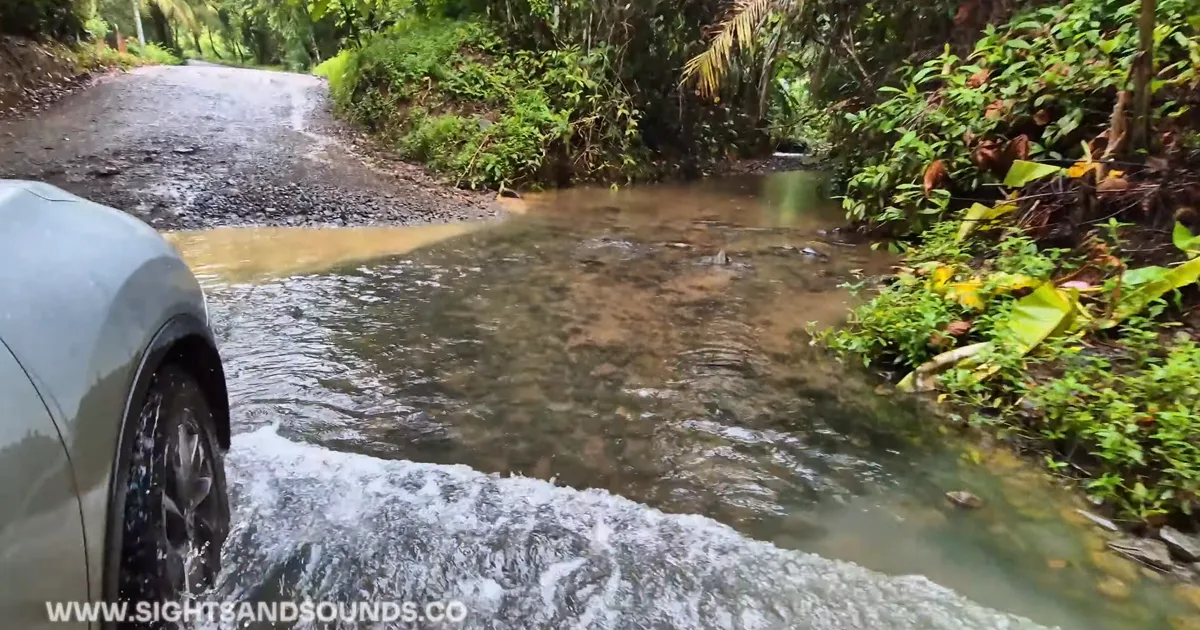
Most popular destinations are accessible in a standard car. Main routes are paved and improving every year. Where higher clearance earns its keep: remote beaches, mountain tracks, and crossings like the stream at Playa Ventanas in Puntarenas (deep ruts, seasonally flooded). A solid middle ground is the Suzuki Jimny. It sits higher than a standard car, has 4WD when you need it, and runs a small engine that's easy on gas.
Stream crossing at Playa Ventanas, Puntarenas — a real example of when higher clearance matters.
Insurance: Take the CDW
Third-party liability is mandatory by law. CDW (Collision Damage Waiver) covers the car itself. Costa Rica has a mandatory government insurance (INS) that's included in most rentals. CDW on top of that protects you from large deductibles if the car is damaged.
Pick Up at the Airport
Both SJO (San José) and LIR (Liberia) have on-site rental desks. LIR is the better pick if you're heading to Guanacaste beaches. It saves 3–4 hours of driving versus flying into San José.
Book Early in High Season
December through April is peak season. Higher-clearance and 4WD vehicles sell out weeks in advance, and prices climb. Book as soon as your flights are confirmed. DiscoverCars holds your car with free cancellation, so there's no downside to reserving early. September is typically the cheapest month to book.
Pick-Up Airports
Frequently Asked Questions
Do I really need a 4WD in Costa Rica?
Not for most itineraries. Costa Rica's main tourist routes — Tamarindo, Arenal, Manuel Antonio, Jacó, the Caribbean coast highway — are paved and handled fine in a standard sedan. Roads keep improving as destinations grow more popular.
Where higher clearance matters: remote beach access roads, river crossings in rainy season (May–November), and off-the-beaten-path spots that haven't been paved yet. Think Playa Ventanas in Puntarenas, deep Osa Peninsula tracks, or some Nicoya Peninsula back roads.
A popular middle-ground option is the Suzuki Jimny. It sits higher than a standard car, has 4WD for when you need it, and runs a small engine that keeps fuel costs down. When in doubt, look up the access road for your specific destinations before defaulting to the largest vehicle on the lot. Still weighing whether to rent at all? Read our full rental car guide.
How much does it cost to rent a car in Costa Rica?
Do I need an International Driving Permit?
How long can I stay in Costa Rica on a tourist visa?
What's the minimum age to rent a car in Costa Rica?
Is my credit card insurance enough?
How far in advance should I book?
Can I drive a Costa Rica rental car into Panama or Nicaragua?
How is driving in Costa Rica?
There are proper multi-lane highways around San José and heading south from Liberia into Guanacaste. Outside those corridors, most roads are single lane and undivided. Drive with caution and give yourself extra time to reach your destination.
Things to watch for: unmarked speed bumps that appear with no warning, livestock and animals crossing, pedestrians, motorcycles filtering between lanes, and trucks coming fast around blind corners on hills. Use Waze. It flags speed bumps and road hazards in real time and is widely used in Costa Rica.
Try to avoid driving at night if you're not a confident driver. Speeds are higher after dark, headlights can be blinding on narrow roads, and driving in heavy rain through the mountains is genuinely stressful. If you can reach your destination before dark, do it.
Otherwise, the road layout is similar to the United States. One local rule worth learning: CEDA means yield. You'll see it on roadside signs and painted on the road, most commonly before single-lane bridges. If CEDA is on your side, stop and wait. Oncoming traffic has the right of way.
This page contains affiliate links. We earn a small commission at no extra cost to you.