
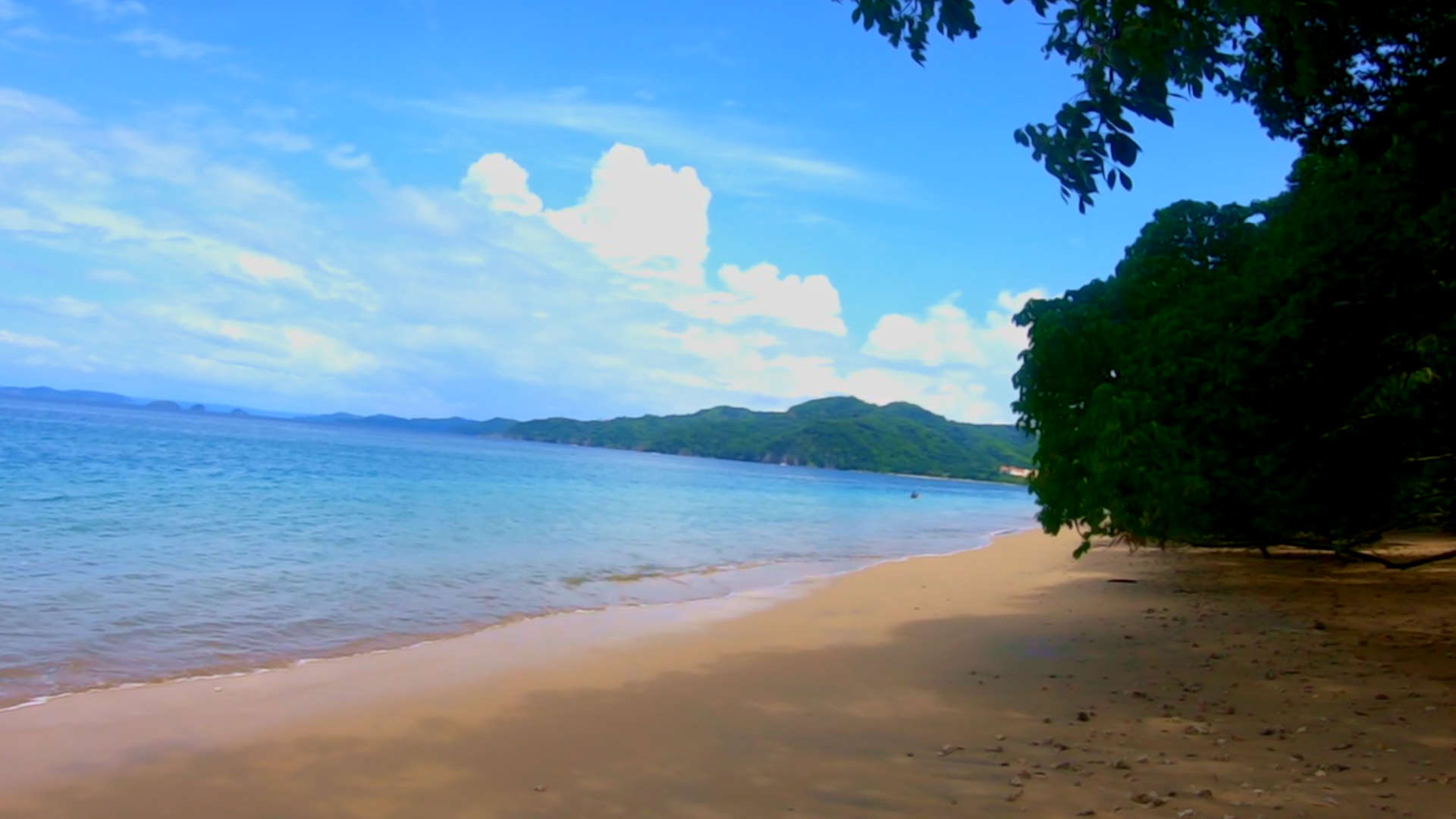
A hidden stretch of white sand beach curves along Guanacaste’s Pacific coast, offering clear waters and natural shade areas. Playa Blanca connects with Matapalo Beach to the north, while the RIU Guanacaste resort marks its southern end.
Access starts through the small town of Nuevo Colon, following rural roads that wind toward the coast. The route keeps visitor numbers lower than nearby beach areas, especially during green season when the dirt roads need more careful navigation.
This section of coastline provides excellent swimming conditions most mornings, with views stretching across the entire bay. Beach almond trees create natural shade along the shore, while the white sand and clear water make it perfect for long walks or relaxing away from more developed beaches.
Getting To Playa Blanca
The journey to Playa Blanca takes you through quiet back roads of Guanacaste. Most visitors access the beach through the small town of Nuevo Colon, about 30 minutes from Liberia airport.
Unlike popular tourist beaches nearby, reaching Playa Blanca requires some local knowledge and careful navigation. The route changes from paved roads to dirt tracks, but the extra effort rewards you with a less crowded beach experience.

Starting from the Highway
From the Liberia International Airport you’ll drive towards the coast. Before reaching Playas del Coco, you’ll turn south towards the Riu Guanacaste Hotel. After about 10 minutes you’ll reach a small town called Nuevo Colon. This is where you’ll either head straight, or turn onto the Monkey Trail(which goes to Potrero & Tamarindo). The small town of Nuevo Colon has a few local shops where you can grab water and snacks. Continue on towards the Riu Hotels.
The paved road winds past local houses and farms. Several speed bumps and very large potholes are usually present on the road so drive with care. The road is paved until you reach the main sign for the Riu.

The Dirt Road Section
The final approach follows a dirt road that varies with seasons. Dry season makes the route dusty but passable for most vehicles, while green season can create muddy sections requiring higher clearance. Several side tracks branch off the main road, so stick to the most traveled path. You’ll actually find the entrance through a gap in the fence. If you’re lucky, there’ll already be a couple cars parked there to point it out.

Pick up a pair of these awesome water shoes. I’ve been using them all over Costa Rica during my travels. They have vented soles so water drains right out the bottom!
Beach Experience
A long curve of white sand stretches until the rocks to the north, offering different spots to set up for the day. The beach’s position in the bay provides good swimming conditions most mornings, and there’s lots of natural shade from beach trees along the shore.
Unlike the RIU resort section to the south, this area maintains a natural, undeveloped feel. The beach width varies with tides but always leaves plenty of space for walking or finding quiet spots away from other visitors.
Swimming and Water Conditions
Morning hours bring the calmest waters, perfect for swimming and floating in the clear bay. The beach slopes gently into the water, making it good for families. Watch for afternoon winds that can bring stronger waves.
Most visitors swim near the center of the beach where the sandy bottom stays consistent. Rocky points at each end attract fish but require water shoes for comfortable exploration.

Shade and Facilities
Beach trees provide natural shade along most of the beach. Early arrival helps secure these coveted shady spots, especially important during hot dry season months.
No permanent facilities exist at the beach, so bring everything needed for your visit. This includes water, snacks, and beach gear. Some vendors occasionally walk the beach selling coconuts and drinks, but don’t count on regular service.
Best Times to Visit
Early morning brings best conditions for swimming and usually fewer people. The beach faces east, so sunset may fall behind the tree line for some of the year.
Weekdays see fewer visitors than weekends when local families often visit. Green season (May-November) brings even quieter beach days, though access requires more planning around weather.
Near The Riu Resort
The southern end of the beach connects with the RIU Guanacaste resort area. While the resort occupies its own section of beach, all Costa Rica beaches remain public by law, letting you walk the entire stretch from Playa Blanca to the resort area.
This connection makes Playa Blanca popular with resort guests looking to explore beyond the hotel beach. The walk between areas takes about 15 minutes along the shore, passing interesting rock formations and offering good photo opportunities.
Resort Area Access
Resort guests often walk north along the beach to reach the quieter Playa Blanca section. The route stays accessible even at high tide, though some rocky sections might need careful footing.
Local vendors are usually set up near the resort end of the beach, who sell food and souvenirs. The beach at the Riu is also open to the public, should you want to explore Playa Matapalo as well.
Beach Differences
The resort section has more amenities but is way more busy. Moving north toward Playa Blanca, the crowd thin out and the beach is more natural and secluded.
The water stays equally clear in both areas, but Playa Blanca often has better swimming conditions due to less boat traffic. The natural shade and wider beach also provide more options for setting up away from crowds.
Watch More From Costa Rica
Keep up with our latest Costa Rica travel videos and guides by subscribing to our YouTube channel. We regularly post new content showing real conditions across different regions and seasons. Leave a comment with your Costa Rica travel questions – we’re happy to help plan your perfect time to visit.